
AI Book Writing vs Human Book Writing: Why Human Writers Win
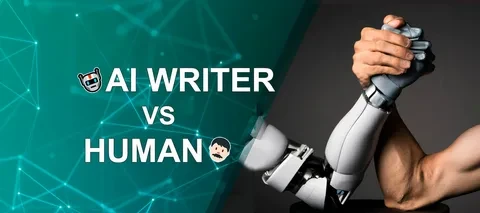
AI Book Writing vs Human Book Writing: Why Human Writers Win

Among many things being digitized is writing; demand is at an all-time high, and every influencer and creator relies on a steadfast solution. With AI broadening its horizons, everyone has this accessibility, and every piece of content is apparently just a few prompts away.
On the surface, it looks great. However, as we go deeper and explore the writing criteria, writing authentic book content by simply putting random words to work for a prompt isn't enough. Humans feed the machine, yet the machine can't completely replace its human counterpart.
But... why is AI vs human content creation the most fascinating debate of all time when machines can work faster than we, human folks? That's what we will discuss and explore in this article.
Fast Words, Missing Heart: How AI Produces Pages and Humans Produce Life in Writing
AI can spit out pages in minutes. You type a prompt, press enter, and paragraphs appear. The history of these machines is long, starting with programs that corrected grammar or filled in forms.
Over time, they got smarter, learned patterns from countless books and articles. Now, they can mimic styles. Hemingway, Rowling, anyone. And yes, they do it fast. But fast is not always right.
AI does not think. It can’t sit quietly with an idea and let it simmer. It does not struggle with a sentence for hours and then stumble into something brilliant. Instead, it predicts. Words. Patterns. Probabilities. The output is coherent, sometimes impressive. But it can feel a little… hollow, like someone tried to fit thoughts into neat boxes.
It is useful. For research-heavy work, outlines, summaries, maybe even drafts. But ask it to write something raw, chaotic, emotionally messy, and it hesitates. Its “safety filters” prevent it from going too far. A novelist exploring pain, anger, or unconventional ideas will notice. AI can suggest, propose, and arrange. It can’t live the experience.
How AI Actually Operates
At its core, AI is math disguised as language. It scans millions of words, notices patterns, and predicts the next word. The bigger the model, the more it can “understand” language, but only statistically.
A 15-chapter story can appear in minutes, characters and plot in place. It reads fine. But something feels missing. Depth and its word limit-token surprise. On top of that, a jolt you get from human error or human intuition? Not there at all.
Sensitive material is tricky. AI avoids it. It can’t fully capture the dark, the grotesque, the controversial. It obeys rules baked into it. That is useful in some cases but limiting in others.
Still, speed is unmatched. Drafting, research, and technical content AI can help. For a writer pressed for time, it is tempting. Yet, those drafts often need a human touch, refinement, editing, and soul.
Human Judgment in Motion: Why Personal Touch in Writing Creates Value That Algorithms Can’t Replicate

Humans have written forever. Clay tablets, scrolls, printed pages, digital manuscripts. Writing is not just words. It is context, memory, and life experience. Humans read the world and translate it.
Professional book writers, ghostwriters for hire, and anyone offering book writing services or ghostwriting services understand this. They listen, interpret, shape, and adjust. A ghostwriter can take an idea, sometimes barely formed, and turn it into a story that feels alive.
The benefits of ghostwriting are real: clarity, structure, and a voice that resonates with readers. Humans can pause mid-sentence, rethink, rearrange, and experiment, but AI can’t.
Where Humans Struggle Creatively?
Even the best writers get stuck. Deadlines loom. Energy fades. Creative blocks happen. A ghostwriter might charge more, reflecting the hours poured into research, structure, and phrasing. Ghostwriting cost depends on quality, expertise, and time commitment.
Ego plays a part. FOMO creeps in. Writers compare themselves, obsess over trends, and second-guess word choices. Humans fail, wander, repeat, pause, and sometimes write nonsense; that is where magic appears. Mistakes can lead to fresh ideas, awkward turns that readers love.
Comparing AI and Human Output
AI is neat. Fast. Reliable. But predictable.
Humans are messy. But emotionally intelligent.
But that messy unpredictability actually creates voice, and paves the way for authentic book content with added personality. A reader senses the human behind the words as they connect with imperfection, idiosyncrasy, and style that bends the mechanical rules.
AI can help. Draft chapters, provide ideas, and organize thoughts. But the real nuance, the tension, the humor is human. Professional book writers bring those things naturally. A human can craft dialogue that feels alive, characters that breathe, tension that hits. AI can’t feel or experience.
The Limits of AI
AI produces pages quickly. You type a prompt, press enter, and paragraphs appear. It can draft a chapter, suggest dialogue, and organize ideas. Fast. Efficient. But there’s something missing. Subtlety. Emotion. Humor. The little oddities in human thought that make a story feel alive. AI can’t stumble on a sentence, pause, circle back, or change direction mid-paragraph. It calculates. Predicts. It does not feel.
It also avoids certain topics. Violence, taboo, and controversial opinions are blocked or softened. A human can explore tension, fear, and chaos without sanitizing it. Readers notice. They feel the difference. AI words can seem neat, correct, but a little… hollow.
Even when AI churns out drafts, the output is repetitive. Sentence structures align too neatly. Patterns emerge. It lacks irregularity, kind of slight mistakes, awkward phrasing, or random tangents that give writing its human texture. Authentic book content comes from messiness sometimes. AI can’t replicate that naturally.
Humans in the Writing Process
Humans have advantages. We pause mid-thought, repeat a word, stray into a tangent, then loop back. We revise sentences three times, abandon paragraphs, and rethink ideas. All this seems inefficient, but it creates depth. Voice. Nuance.
Professional book writers and brand-oriented ghostwriters for hire know how to make these choices work in favor of the story. They understand pacing, tension, and emotion.
Even with limits, deadlines, fatigue, and creative blocks, humans can produce work that resonates. Ghostwriting services exist for this reason. A ghostwriter takes raw ideas, sometimes half-baked, and turns them into cohesive stories.
The benefits of ghostwriting include structure, clarity, and maintaining a unique voice while meeting the client’s vision. AI can’t replicate the intuitive decisions a ghostwriter makes when shaping voice or adjusting tone.
Humans can experiment. Break grammar intentionally, use repetition without making anything look extremely redundant. Add humor or awkward phrasing while maintaining the balance, and these choices lend the story authenticity. Readers detect it instinctively. They connect.
Human-Led Creative Workflows That Use AI Only Where It Adds Clear Utility
AI is consistent, predictable, and fast. It can organize chapters, suggest plot points, and summarize research. It is useful for volume. But patterns give it away. Word choice, sentence length, and phrasing repeat statistically, resulting in infamous AI slop and, without the randomness, small “errors,” or unusual turns humans naturally add, the content feels robotically dull, without an inch of depth to the writing it's supposed to have.
Humans are messy, slow, and imperfect. But this imperfection brings advantages of human book writing in the form of raw emotion, intuition, and authentic voice. A human writer decides how tension builds, how humor lands, how characters interact unpredictably. AI can’t experience emotion, and therefore can’t anticipate reader reaction in the same way.
Even a careful human can produce work that feels alive. Small imperfections, fragmented sentences, and odd transitions are part of the rhythm. AI does not drift. It can’t pause, linger, or emphasize an idea by repeating a thought mid-paragraph.
AI is not useless. It can research, draft, suggest, and organize. But it works best as a tool, not a replacement. A hybrid approach is practical. Humans draft, refine, adjust, and inject personality. AI assists. Corrects grammar. Suggests vocabulary. Produces rough outlines.
Knowing ghostwriting cost helps plan this. A writer supported by AI can manage deadlines more efficiently without sacrificing depth. Personal touch in writing remains crucial. The AI provides scaffolding. The human fills it in with nuance, voice, and emotion.
Balance matters. Too much AI, and the content feels mechanical. Too little, and efficiency suffers. The key is knowing how to use AI smartly, without leaning on it for creative judgment. Humans make decisions. AI supports them.
The Linguistic Trap of AI
AI writing is oddly predictable. You notice it after a few paragraphs. Words fall into patterns. Sentences repeat structures. Paragraphs end in the ways they “should.” Transitional phrases appear like a checklist: “Bring Your Vision to Life,” “Landscape,” “Delve into.” It’s neat. Consistent. But it lacks unpredictability.
Humans, on the other hand, don’t follow those patterns naturally. A sentence may start one way and drift. A thought may circle back mid-paragraph. We repeat words, pause mid-sentence, or wander into small tangents before returning to the main point. That is a personal touch in writing. It makes the text feel alive, even when imperfect. AI can’t do this naturally.
Dialogue is another clear example. AI predicts what a character “might” say based on probability, not experience. Humans stumble. We interrupt ourselves. We speak in fragments. Slang, cultural references, and misused words all these small errors make dialogue feel real. Readers subconsciously detect the difference.
The Subtle Power of Human Creativity
Humans face blocks, fatigue, and deadlines. Yet these struggles often produce the most interesting writing. You pause, consider a sentence, and rewrite it three times. You wander off, pick up a new idea, and loop it back. Mistakes are part of the process. They create rhythm, voice, and authenticity.
Professional book writers leverage this. They don’t just draft words; they make judgment calls. They adjust tone, rearrange chapters, and add nuance. Even ghostwriting cost reflects this labor: it’s the time, expertise, and insight that machines can’t replicate.
AI can help with research or structure. It can summarize chapters or suggest vocabulary. But it can’t feel the weight of a story, the emotional resonance of a moment, or the tension between two characters. Humans do that instinctively. That is why human writers are preferred in serious literary work.
Hybrid Approaches: Getting the Balance Right
AI is a tool, not a replacement. Its value lies in speed and organization. Some writers use it to brainstorm, outline chapters, or organize notes. That is fine. But when a human takes over polishing language, choosing phrasing, shaping the work becomes authentic.
Too much AI, and the story feels mechanical. Too little, and the writer misses efficiency gains. The best outcomes happen when AI supports, not dominates. Advantages of human book writing become clear in this hybrid approach: humans provide judgment, emotion, unpredictability, while AI handles volume and repetition.
When AI Fails
A simple prompt like “Write a 15-chapter book about a man finding purpose” illustrates AI’s limits. The structure might be intact. Characters exist. Plot points appear. But the depth is missing. Emotional complexity, cultural nuance, unpredictability- these are flattened. AI can’t capture sensitive content the way a human can. Filters prevent it. It can’t explore chaos, fear, or controversial ideas fully.
Its writing tends toward symmetry. Sentences are of similar length. Word choice is conservative. Patterns emerge across pages. Predictability is its inherent limitation. Humans write unevenly. We break rules on purpose. We experiment. Sometimes the best sentences come from errors or tangents. That makes stories feel alive.
The Human Edge
Even when overwhelmed, humans inject voice, perspective, and life. Ghostwriting services exist because humans can interpret vague ideas, messy drafts, or raw emotion, then craft them into compelling text. They know pacing, tension, and resonance in ways AI can’t. Readers connect to this authenticity, not speed or grammatical perfection.
Human writing is about decisions: when to leave a sentence incomplete, when to repeat a phrase for emphasis, when to circle back to a thought mid-paragraph. These choices matter. AI can suggest, but can’t decide in the same intuitive way.
The Complexity of the Mind: Ego, FOMO, Deadlines

Human writers are complicated. Ego influences choices. FOMO can lead to over-editing or chasing trends. Deadlines create pressure, but also urgency. Fatigue can produce mistakes; sometimes mistakes produce brilliance. That combination of unpredictability, reflection, and instinct is what AI can’t replicate.
Humans can read culture, understand emotional nuance, respond to social dynamics, and anticipate reader reactions. AI predicts probabilities. Humans anticipate experience. That gap ensures that even in a hybrid workflow, the human is the driving force.
Why Human Writers Win
At the end, humans win because of judgment, creativity, and lived experience. Machines calculate. Predict. Organize. Humans reflect. Feel. Stumble. Innovate. Even when using AI to support their work, the human hand shapes meaning. Decisions about voice, tension, humor, and chaos can’t be delegated to a machine.
AI can accelerate writing, assist in research, and help organize thoughts. But the heart of the story, the soul of the words, is human. Professional book writers, ghostwriters, and those offering book writing services ensure the work resonates. They bring depth, intuition, and subtlety. That is why human writers are preferred, and why even in a high-tech world, the advantages of human book writing remain undeniable.
Operational Insights on Human Judgment in AI-Supported Writing
The major differences between AI and human writing? AI is a tool that promises a lot. You type a prompt, and it produces pages. Outlines, dialogue, research summaries, and even chapter suggestions. At first glance, it feels impressive. But the moment you try to make the story feel alive, the limits become obvious. AI does not pause, does not rethink words, and does not sense tension or hesitation. Humans do. Humans notice inconsistencies, the flicker of personality, the tension that gives life to a scene.
Hybrid approaches require judgment. Some writers use AI for research-heavy sections. Historical context, technical details, factual summaries. Useful. It saves hours of repetitive work. But the human has to interpret it, filter it, decide what matters. Without human oversight, AI-generated text feels accurate but empty. That gap, that subtle heartbeat, is where the personal touch in writing comes in.
Consider emotional nuance. AI can describe crying, shaking, and awkward pauses. But humans know subtleties. A flicker of memory interrupts speech, hesitation before a word, small contradictions in thought. These details make authentic book content resonate. Without them, text is flat. Readers may not notice why it feels empty, but they feel it.
Even mundane details matter. A glance, a pause, a slightly awkward gesture. Humans notice. AI summarizes. That is why professional book writers and ghostwriters for hire remain necessary. They see the small things, the ones that make scenes breathe.
How Much AI Is Too Much?
There is no exact measure. Some writers use AI heavily. Others barely touch it. The danger is over-reliance. Too much AI and sentences read neatly but are emotionally flat. Patterns emerge. Repetition shows up. Subtlety disappears.
The trick is restraint. AI can support, but humans must create. Pacing, tension, emotional beats, narrative voice, human domains. Advantages of human book writing appear when AI’s mechanical tendencies are tempered by human experience. Humans provide rhythm, variation, and intentional imperfection. AI can’t simulate hesitation or digression without sounding forced.
Even mistakes matter. Humans pause mid-sentence, repeat words, wander slightly. Imperfection gives life. Readers recognize it. It feels real. AI produces uniformity. Humans produce resonance.
Hiring a Ghostwriter: Insights and Realities
Complex book memoirs, nonfiction, and multi-character novels often require guidance. Hiring a ghostwriter provides structure, clarity, and a professional voice. Ghostwriters take raw ideas, brainstorm, outline, and shape drafts into narratives that make sense. They decide which anecdotes matter, which phrases hit the mark, and which passages convey tone.
Ghostwriting cost varies. Some charge per word, others per project or hour. Experience, complexity, and collaboration determine the price. More feedback rounds cost more, but the result is stronger. AI can reduce repetitive work but can’t replace judgment, insight, or creativity.
The benefits of ghostwriting go beyond efficiency. Ghostwriters preserve voice, maintain structure, and anticipate pitfalls. They notice subtle tonal inconsistencies, awkward dialogue, and flat descriptions. Humans catch what AI misses.
A practical example: a memoirist struggles to convey fragmented childhood memories. A ghostwriter arranges the fragments into a coherent narrative. AI could summarize the memories, but it would lack emotional resonance, hesitation, irony, and humor.
Real-World AI Limitations
Picture AI writing dialogue during a tense scene. Grammar is correct, and sentences are logical. Tension is missing. Micro-pauses, glances, and implied subtext are absent. Humans fill those gaps naturally. The difference is subtle but crucial. Readers feel it even if they can’t describe it.
Even nonfiction exposes limits. AI can summarize studies, highlight points, and propose sequences. But it can’t judge what engages readers, provokes thought, or resonates emotionally. Humans make these calls. They decide which details to emphasize, which stories to tell, and when to leave space for reader interpretation.
Style suffers too. AI prefers symmetrical sentences, neat paragraphs, and predictable transitions. Humans can start mid-thought, digress, circle back, or leave ideas unfinished. That asymmetry adds depth, tension, rhythm, and personality.
The Human Advantage in Language
Humans experiment with language. Breaking grammar, starting mid-sentence, repeating words, and inserting minor contradictions all add life. AI calculates probabilities; it can’t choose chaos on purpose. That is why human writers are preferred: instinct, experience, judgment.
Tangents are powerful. A fleeting anecdote, a minor character, and a short memory add texture. AI avoids them. Humans understand that authenticity and texture sometimes outweigh efficiency. That is part of the personal touch in writing.
Why Humans Remain Essential?
Humans decide what matters. Emotional nuance, humor, cultural context, and ethical considerations require lived experience. Humans weigh consequences, anticipate sensitivity, and make judgment calls. AI can’t.
Complex human thought, FOMO, deadlines, creative blocks, and shapes writing uniquely. Humans pause, reconsider, rewrite mid-paragraph, add humor or irony, break patterns intentionally. AI produces consistency. Humans produce resonance.
Practical Tips for Hybrid Workflows
- Draft with AI, edit with humans. AI handles outlines, research, and repetitive phrasing. Humans refine voice, pacing, and emotion.
- Avoid over-reliance. Review AI outputs for symmetry, predictability, and flatness. Introduce variation.
- Use AI for volume, humans for depth. Let AI manage repetitive content; humans add nuance, tension, resonance.
- Integrate ghostwriting services. Combine AI drafts with ghostwriters to maintain clarity, coherence, and authenticity.
These steps preserve efficiency without sacrificing depth. They reinforce the advantages of human book writing while leveraging AI support.
Quality Control Standards That Keep Hybrid Writing Reliable

Setting Strong Standards at the Start
Strong writing teams treat quality control as a structured discipline. This keeps hybrid work steady and prevents AI outputs from slipping into a uniform tone or weak logic. Professional book writers rely on checkpoints, documented review stages, and internal controls that preserve clarity and voice.
Checking the Core Direction Early
Teams begin with a foundation review. This step verifies that the material aligns with the project scope, target audience, and narrative direction. AI often produces content that sounds correct but sits off-track from the intended purpose. A foundation review recalibrates the direction before deeper editing begins. Writers look for gaps in logic, missing context, or uneven pacing. This step creates alignment early and reduces heavy fixes later.
Measuring Tone and Rhythm Carefully
The next stage focuses on tone audits. Human reviewers study the rhythm of the text, the flow of ideas, and the emotional temperature. Tone drift is common when AI enters the pipeline because AI tends to flatten emotional range or apply symmetrical sentence construction. Tone audits correct this issue through selective rewriting. Reviewers adjust cadence, swap phrasing, tighten arguments, and introduce natural irregularities that keep the content human in spirit.
Strengthening Sentences One Line at a Time
Line-level control follows. This step works at the sentence scale. Editors check transitions, verify that the text avoids generic phrasing, and confirm that each line carries a purpose. They reduce unnecessary repetition and ensure the writing remains direct and clean. This step gives structure to long manuscripts and prevents bloat.
Verifying Facts to Protect Credibility
Fact control carries its own weight. Nonfiction projects require verification across dates, events, terminology, and industry vocabulary. AI can generate plausible errors. Human reviewers check citations, track claims, and validate details against trusted sources. This step builds confidence with readers and protects the writer’s credibility.
Shaping the Structure for Flow and Logic
Structural calibration is the next discipline. Reviewers study chapter flow, section alignment, and narrative movement. They check if the argument unfolds logically or if story elements land at the right moments. When AI contributes content, structural reshaping becomes important because AI favors linear patterns that do not always support dramatic tension or thematic depth.
Testing the Work Through the Reader’s Eyes
The last stage is audience testing. This involves reading the content from the viewpoint of the intended reader. Reviewers measure clarity, impact, and retention. They confirm that the material answers questions the reader actually cares about. This step ensures that the manuscript delivers value rather than volume.
These quality controls create predictable outcomes in hybrid writing environments. They reduce risk, maintain discipline, and keep the final manuscript aligned with human standards. This system turns AI from a loose support tool into a dependable component within a professional workflow.
Final Thoughts: Why Human Writers Win
Humans decide what matters, what to emphasize, and what to leave unfinished. They create tension, rhythm, and personality. Machines can’t. The subtle artistry of language, the personal imprint, and the lived-in feel that is human bring the real personal touch in writing.
Smart authors use AI wisely but never let it drive the story. They balance efficiency with judgment, volume with depth, and support with creativity. Humans combine skill, insight, and instinct. AI accelerates, organizes, and suggests. Humans create life, resonance, and connection. That is why human writers win.