
Book Marketing Cost Guide 2026: How Much Should Authors Really Spend?
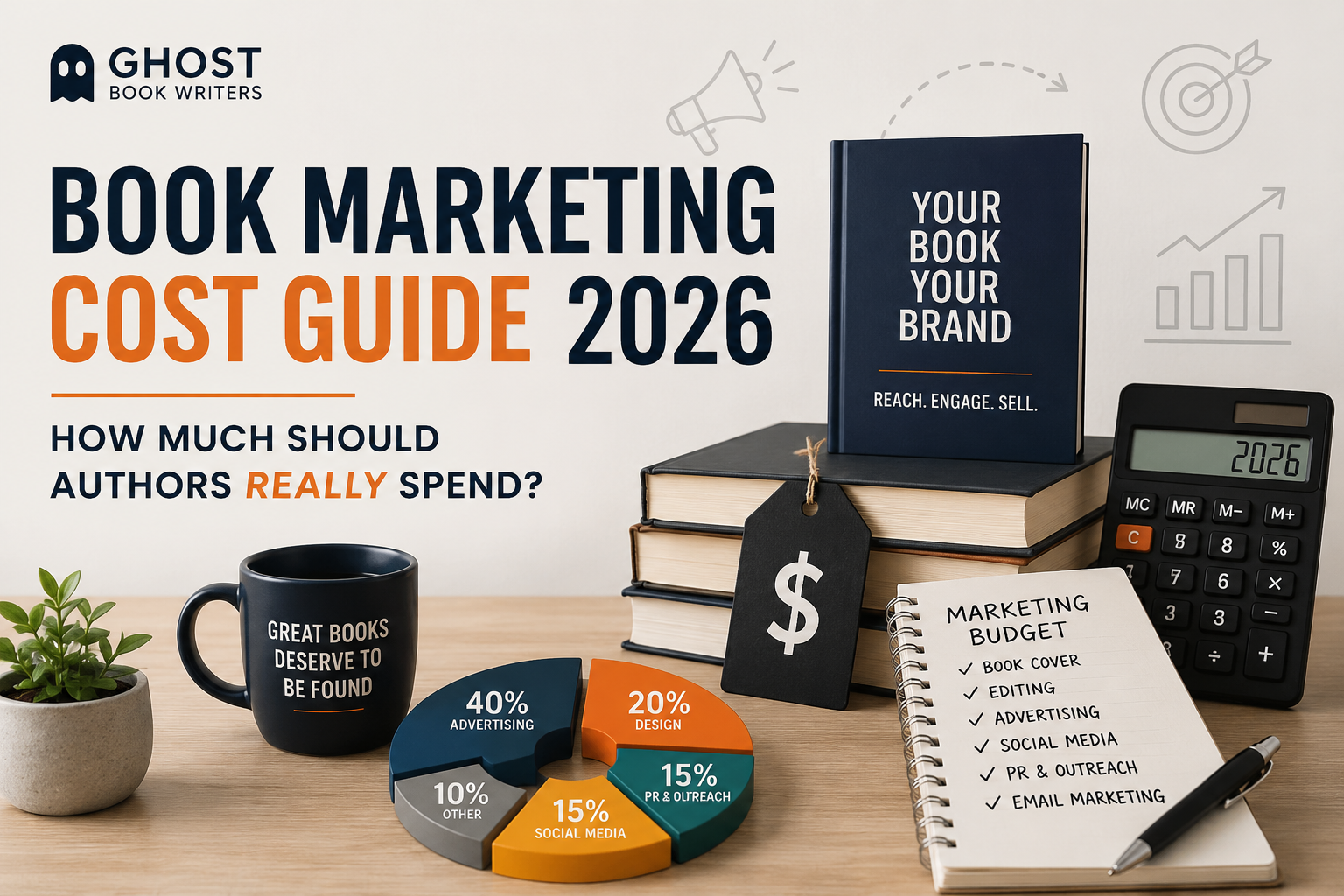
Book Marketing Cost Guide 2026: How Much Should Authors Really Spend?

Let's get one thing straight right out of the gate. Writing a great book is about thirty percent of the battle. The remaining seventy percent is visibility. And visibility in 2026 costs money. Or at minimum, it costs time that you could have spent writing your next book.
If you are an author, it might be possible that you feel genuine dread when you first confront the question of how to promote your book. Most authors have just dropped anywhere from three to five thousand dollars on professional editing, cover design, and formatting. They are staring at a beautifully polished manuscript. And now someone is telling them they need to spend more. On ads. On promo sites. On social media content. On things they barely understand. It feels like a bottomless pit. It feels like being scammed.
But here is the contrarian truth that separates authors who build sustainable careers from those who publish one book and disappear. Marketing is not a cost. It is an investment mechanism. The problem is not that marketing costs money. The problem is that most authors have no framework for deciding how much to spend, where to spend it, and when to pull the plug on something that is not working.
This guide is not going to give you a single magic number. Anyone who does that is selling you something. Instead, we are going to walk through a resource allocation strategy that accounts for genre, launch phase, and your personal tolerance for risk. By the end, you will know exactly how to think about the cost to market a book. More importantly, you will know how to make every dollar count.
Rethinking Your Self-Published Author Marketing Budget
Let us address the elephant in the room. The phrase "marketing budget" makes most indie authors wince. It conjures images of spreadsheets, anxiety, and money disappearing into the void of Facebook's ad manager. But here is the thing. A self-published author marketing budget is not about how much you have. It is about how you phrase it.
The Phase-Based Spending Model
Most budgeting advice treats marketing as a single lump sum. Spend X amount, get Y results. That is not how it works in practice. Treating it that way is a fast track to disappointment.
Think in phases instead.
Pre-launch happens three to six months before publication. This is where you build the runway. Your spending here should focus on assets that compound. Professional cover design. A functional author website. Email list setup. Advance reader copy distribution. According to industry data, a reasonable starting range for focused pre-launch promotion is three hundred to one thousand dollars plus. This covers ARC copies, early review acquisition, and initial promotional groundwork. This phase is not about volume. It is about the foundation.
Launch week is where you pour fuel on the fire. Your spending spikes here. Paid ads. Promo site placements. Newsletter swaps. The goal is velocity. Amazon's algorithm rewards sales momentum. Launch week is when you can generate the most organic visibility per dollar spent.
Evergreen momentum kicks in after the launch dust settles. You are in maintenance mode now. This is where you test, optimize, and scale what worked. Your spending here should be driven by data, not emotion.
The Hidden Costs Nobody Talks About
Here is where first-time authors get blindsided. Beyond the obvious ad spend, there are costs that rarely make it into the book marketing spreadsheets.
ARC distribution platforms like NetGalley and BookSirens are not free. A sponsored social package from NetGalley runs around four hundred dollars and includes Instagram, Facebook, and Threads promotion.
Newsletter swap coordination tools like BookFunnel and StoryOrigin typically have monthly subscription fees. The swaps themselves are often free, but the tools that facilitate them cost money.
Graphics creation is another expense. Unless you are a designer, you are going to need promotional graphics for ads, social media, and email campaigns. Professional packages start around six hundred dollars for a month of optimized social media content.
Promo site fees add up, too. BookBub Featured Deals cost between five hundred and two thousand dollars as of 2026. The data shows they generate average sales increases of three hundred to eight hundred percent during promotion periods.
The takeaway is simple. Your marketing budget is not just about ad spend. It is about the entire ecosystem that supports visibility.
Why Overspending Early Is a Mistake
Here is a hard truth. Spending big on marketing before you have verified your book's conversion metrics is throwing money into a fire. You would not pour five thousand dollars into Facebook ads for a product that has not been tested. So why would you do it for your book?
The smart play is to start small, gather data, and scale what works. Most authors begin with ten to fifteen dollars per day on Amazon ads. Not because that is a magic number, but because it is enough to collect meaningful data without burning cash during early testing. That data tells you whether your cover converts. It tells you whether your description hooks readers. It tells you whether your keywords are actually reaching the right audience.
High Leverage Assets vs Variable Amplifiers
Professional editing and custom cover design are high-leverage assets. They compound over time, and they are foundational. Variable amplifiers like Amazon ads and promo site placements are directly tied to spend. You can turn them on and off. If your conversion foundation is weak, amplifiers just accelerate your losses. If your foundation is strong, amplifiers accelerate your gains.
Decoding the Real Cost to Market a Book Beyond the Clichés
Search for the cost to market a book, and you will find a thousand generic articles telling you to just spend a thousand dollars on Facebook ads. Or to budget twenty percent of your royalties for marketing. This advice is technically correct and practically useless. It ignores the single most important variable in book marketing. You.
The Time vs Currency Trade Off
When we talk about book promotion cost, we are usually talking about money. But that is only half the equation. The other half is time. And time has a value that most authors completely fail to account for.
Consider social media. Posting on TikTok, Instagram, or Threads is technically free. But the time cost is substantial. Planning content. Filming. Editing. Engaging with comments. Keeping up with algorithm changes. A professionally managed social media content package for one platform runs around six hundred dollars per month. That is the market rate for what your time is worth if you outsourced it.
The question is not whether you can afford to pay for marketing services. The question is whether you can afford not to. If the time you would spend on marketing is better spent writing your next book, then outsourcing makes sense.
Genre Dictates Your Spending Pattern
Here is something that rarely makes it into the generic how much does book marketing cost articles. Your genre determines your spending pattern more than your budget does.
Romance authors typically need high-frequency, rapid-release budgets. The genre moves fast. Readers consume quickly and move on. To stay visible, you need consistent ad spend and frequent new releases. Your book marketing ROI here comes from read through. If book one acquires a reader at a loss, books two, three, and four in the series make up the difference.
Non-fiction authors need high authority lead generation. The sales cycle is longer. You are not competing for impulse buys. You are competing for trust. Your marketing spend should focus on building authority through podcast appearances, guest blogging, and speaking engagements. The ROI horizon is longer, but the lifetime value of a non-fiction reader is often higher. They may buy multiple books, courses, or consulting services.
Thrillers and mysteries sit somewhere in the middle. You need visibility, but you also need to build a backlist. The economics work best when you have multiple titles. Each new release lifts the entire catalog.
The Reality of Affordable Book Marketing Services
When authors search for affordable book marketing services, they are usually hoping to find a shortcut. A cheap way to get big results. Those services exist, but they come with trade-offs.
A DIY launch with minimal paid support might cost five hundred to two thousand dollars. You are doing most of the work yourself. Writing the copy. Managing the ads. Coordinating the promotions. At the other end of the spectrum, full-service agencies charge five thousand to twenty thousand dollars or more. They handle everything, but you are paying a premium for their expertise and time.
The sweet spot for most authors is somewhere in the middle. Hire specialists for specific tasks like cover design, Amazon ad management, and ARC coordination. Handle the rest yourself. This approach gives you professional execution where it matters most while keeping the overall book promotion cost manageable.
Anatomy of an Algorithm: Paid Traps vs Smart Plays
The Paid Ad Eco System
Let us talk about Amazon book advertising cost. This is where most authors either make their careers or drain their bank accounts.
In 2026, the landscape has shifted. Cost per click inflation is real. Amazon's wide average CPCs are projected to hit one dollar and eighteen cents to one dollar and twenty-five cents per click. That is up from one dollar and fifteen cents in 2024. For authors running serious campaigns, that inflation compounds fast. A ten percent CPC jump on five thousand dollars of monthly spend means five hundred dollars less profit before you have optimized a single campaign.
But here is the good news. Book advertising CPCs in most categories run significantly lower than the Amazon-wide average. They typically fall between fifteen and sixty cents. Romance keywords might cost thirty to eighty cents per click. Competitive business book keywords can run one dollar and fifty cents to three dollars or more.
The barrier is not the cost per click. It is the conversion rate of the page the reader lands on. You can spend fifteen cents per click all day long. But if your cover does not signal genre quality, or if your description fails to hook readers, you are just paying for window shoppers who never buy.
The smart play in 2026 is tighter keyword matching rather than broad match spending. Amazon's algorithm rewards relevance. A well-targeted campaign with a professional cover and strong reviews can beat a higher bid from a poorly converting competitor. Quality score matters. Your ad's predicted click-through rate and conversion probability multiply your bid in the auction. A better book, properly presented, can outcompete a bigger budget.
The Organic Illusion
Social media book marketing cost is one of the most misunderstood line items in any author's budget.
The platforms are free to post on. But the time cost is real. So is the cost of editing software, video gear, and the expertise to use them effectively. A single Instagram post from a professional service might cost eighty dollars. A full sponsored package across multiple platforms runs four hundred dollars.
Here is the uncomfortable truth. Organic social media is not a reliable primary acquisition channel for most authors. The algorithms are designed to keep users on the platform, not to send them to Amazon to buy your book. The conversion rates are abysmal. One author who sold roughly sixty-four thousand copies of her book saw a one percent conversion rate from her social media efforts. That was considered very good for the platform she was using.
Does that mean you should not be on social media? No. But you should treat it as a relationship-building tool, not a primary sales channel. Your book marketing plan should treat social media as one component of a broader strategy, not the whole strategy.
Measuring ROI Without Getting Bogged Down
Book marketing ROI does not have to be complicated. Here is the simple framework.
For a single book, look at total revenue from book sales minus total marketing spend. If you spent five hundred dollars on ads and generated seven hundred fifty dollars in sales, your ROI is fifty percent. Positive. Good.
For a series, look at read through rates. If book one acquires a reader at break-even or a slight loss, but that reader goes on to buy books two and three at full price, the ROI on that initial acquisition is actually higher than it appears. This is why series authors can afford to spend more on acquisition than single title authors.
The key is tracking. Use UTMs, landing pages, and proper attribution to know where your sales are coming from. Without data, you are guessing. And guessing is expensive.
The Structural Framework: Building a Fluid Blueprint
The Agile Book Marketing Plan
Most authors treat their book marketing plan like a wedding itinerary. Rigid. Unchangeable. Stressful. That is a mistake. Your marketing plan should be a living document that adapts to what the data tells you.
Here is a three-step action loop that works.
Step one is audience identification. Who actually reads books like yours? Not who you hope reads them. Who actually does. This means looking at Amazon's Also Boughts. It means studying comparable authors' followings. It means understanding where your target readers congregate online.
Step two is asset creation. Before you spend a dime on promotion, make sure your assets are conversion-ready. Professional cover? Check. Compelling and correctly formatted description? Check. At least five to ten genuine reviews? Check. Running ads without these in place is one of the most reliable ways to waste money on Amazon.
Step three is visibility engines. This is where you actually spend money. Start with one channel. Amazon ads, Facebook ads, or a promo site. Test it with ten to fifteen dollars per day. That is enough to gather meaningful data. Scale what works. Kill what does not. Then test the next channel.
The Ghost Leverage
Here is a counterintuitive concept. External professionals, like a ghostwriter book marketing consultant or developmental editor, are not just production costs. They are marketing costs in disguise.
How? A skilled ghostwriter or editor bakes hook-driven marketing copy directly into the book's description, front matter, and back matter. They understand what makes a reader click buy because they have studied what sells. A well-crafted description written by someone who understands reader psychology is worth more than five hundred dollars in ad spend.
The same goes for a developmental editor who helps you structure your book for maximum engagement. A book that hooks readers in the first chapter and keeps them turning pages generates word-of-mouth marketing that no amount of ad spend can replicate.
Quality is marketing. It always has been. In 2026, with AI-generated content flooding the market, quality is more valuable than ever.
Frequently Asked Questions
How much does it cost to market a book in 2026?
There is no single answer. Anyone who gives you one is oversimplifying. A lean, DIY focused launch with minimal paid support might cost five hundred to two thousand dollars. A more aggressive campaign with professional services, ads, and promo site placements could run five thousand to twenty thousand dollars or more. The key is not the absolute number. It is the framework. Spend on assets that compound before you spend on amplifiers. Start small, test, and scale what works. Allocating at least thirty-three percent of your total budget to marketing is a reasonable baseline.
What is a good book marketing budget for a first-time author?
Conservative is the name of the game. A first-time author should prioritize building an email list over direct ad spending. Why? Because an email list is an asset you own. Ad spend is rented visibility. When you stop paying, the visibility stops. A practical starting point is three hundred to one thousand dollars for focused promotion. This covers ARC distribution, basic ad testing, and a simple website or email setup. If you have more to spend, put it into the quality of the book itself. A professional cover and thorough editing will generate better ROI than an extra one thousand dollars in ad spend on a book that does not convert.
How do I create a book marketing plan?
Forget the linear, step-by-step checklists. Build a fluid, three-part loop instead. First, identify your audience. Know exactly who your readers are and where they hang out. Second, create your assets. Ensure your book, cover, description, and reviews are conversion-ready. Third, test your visibility engines. Try one channel at a time. Scale what works. Kill what does not. Repeat. Your plan should adapt based on data. If Amazon ads are generating a three times return, put more money there. If Facebook ads are bleeding cash, pause them and try something else. The best plan is the one that evolves.
Can a ghostwriter help with book marketing?
Absolutely. But not in the way most authors expect. A ghostwriter does not just write your book. They embed marketing hooks into the DNA of the manuscript. They craft a description that makes readers click buy. They structure front matter and back matter to maximize conversions and build your email list. They understand reader psychology because they have studied what sells. A skilled ghostwriter is a marketing asset disguised as a writing expense. If you are hiring one, make sure they understand the commercial realities of your genre, not just the craft of writing.
What is the cheapest way to promote your book?
The cheapest way is not always the easiest, but it is the most sustainable. Organic community integration. This means high-value newsletter cross-promotions with authors in your genre. It costs nothing but goodwill. It means building a dedicated street team of early readers who genuinely love your work and will spread the word organically. It means authentic engagement in reader communities where your target readers gather. Not to sell, but to contribute. The sales follow the value. None of these strategies costs money. They cost time and genuine effort. For authors with more time than money, these strategies are the foundation of a sustainable career. For authors with more money than time, they are worth outsourcing.
Final Thought
The cost to market a book in 2026 is not about a number. It is about a mindset. Every dollar you spend should be interrogated. Is this building an asset I own? Or is this renting visibility? Is this accelerating what is already working? Or am I trying to fix a broken foundation?
Write a great book. Present it professionally. Test small. Scale what works. Kill what does not. And remember something important. The best marketing strategy in the world cannot save a book that readers do not want to read. But a book that readers love? That is the kind of asset that markets itself.